

Books
Greg Kovacs —
Therapy, Research, and the Science of Relationship.
Bridging the gap between family science and real-world connection.


Physical Chores are Easy to See. The Mental Load is Not. Rebalance the Invisible Labor in your Partnership.
Take the Relational Audit
Learn more about the upcoming book by Dr. Greg Kovacs:
The Engine Room: Mapping Emotional Labor, Reclaiming Intimacy, and Modeling Equity for the Next Generation
By Greg Kovacs, PhD
From Managed Exhaustion to Operational Autonomy
Modern couples often treat domestic labor as chores to be delegated-a fundamental design flaw in modern partnership. We focus on who physically shops for groceries, but we ignore the process of anticipating that the milk will run out, identifying what's missing from the pantry, deciding on the week's meals, and monitoring the fridge to ensure nothing is wasted. This is Cognitive Labor-the four-stage process that drains our bandwidth long before the physical work begins. When one partner owns the execution but the other owns the 'thinking,' the result isn't a partnership; it's managed exhaustion.
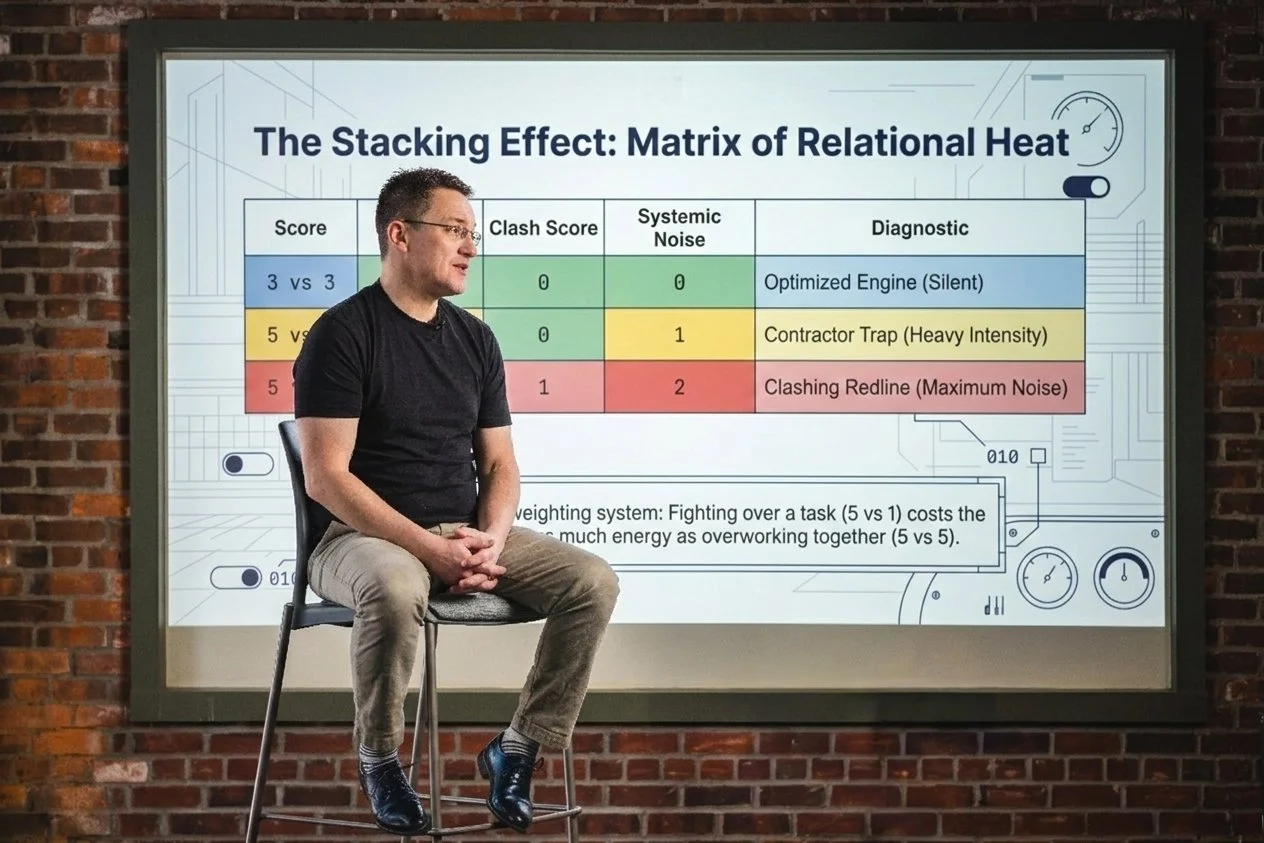
The home is the only high-stakes system you haven't optimized. Until now.
ln his upcoming book, The Engine Room™: Mapping Cognitive Labor, Reclaiming Intimacy, and Modeling Equity for the Next Generation, Dr. Greg Kovacs operationalizes the latest research in systemic theory and relational mechanics. By translating the complexities of family science into a structural framework, he provides an evidence-informed roadmap that moves couples from reactive exhaustion toward resilient, autonomous connection.
The Framework: The Four Stages of Cognitive Labor
At the core of the book is the discovery that domestic friction isn't caused by "laziness," but by a failure to account for the full spectrum of labor. Most couples only see the "doing." Building on the work of Allison Daminger, Susan Walzer, Arlie Hochschild, and Eve Radsky, The Engine Room teaches you to own the entire engine.
Anticipate: Projecting future needs before they become crises.
Identify: Specifying the exact requirements for a solution.
Decide: Making the executive call on the course of action.
Monitor: Ensuring the task is completed to the system's "Set Point."
Individual well-being is inseparable from the quality of our closest relationships. The Engine Room™ provides a structural framework for understanding how we relate, how we think, and how we grow together.
Vision
(The Map):
Calibrating your internal narratives to shape external interactions.
Infrastructure
(The Engine):
Analyzing the invisible patterns within the family unit to build automated defaults.
Integration
(The Bridge):
Moving from reactive cycles to resilient, conscious connection through intentional communication.
Mastery
(The Territory):
Operationalizing the CPE Model to reclaim your time and cognitive bandwidth.
What's Inside the Book
Part I: The Invisible Architecture:
Before we can fix the system, we must understand the "inherited blueprints" that shaped it.
-
Learn the critical difference between "Mental Load" and "Emotional Labor".
-
Discover why "helping out" is a failed framework and why true Domain Ownership is the only sustainable solution.
-
Review the data on how parental over-functioning affects the entire family, including child cortisol levels and parental burnout.
Part II: The Assessment
(The "Audit" Phase):
We make the invisible labor of planning, noticing, and remembering visible so it can be reallocated.
Radsky, E. (2019)
-
Operationalizes Eve Rodsky's CPE Model [link to Radsky, E. (2019). Fair play: A game-changing solution for when you have too much to do (and more life to live). G.P. Putnam's Sons in hidden page /sourcelist] to help couples identify and reallocate the three layers of every domestic task: Conception, Planning, and Execution.
-
Address how unaddressed labor imbalances lead to "Relational Erosion" and the decline of the "Erotic Spark".
Part Ill: The Intervention
(The Clinical Framework):
Move from reactive "honey-do" lists to a proactive operational infrastructure.
-
Learn to establish shared household standards that eliminate the need for "nagging" or "defensiveness".
-
A structural protocol for troubleshooting your household infrastructure without character attacks.
-
Strategic ways to wall off your relationship from domestic demands to prevent becoming "roommates who raise kids."
Part IV: The Generational Payoff
The goal isn'tjust a clean house; it is a sustainable, joyful identity and a legacy for your children.
-
Understand why an equitable household is the most powerful relationship education you can provide for your children.
-
Discover how reclaiming your time leads to a more sustainable and vibrant mid-life and beyond.
Who This Book Is For
The Over-Functioning Manager:
The partner who is "tired of being the only one who thinks" and is ready to hand over true domain ownership.
The Under-Functioning Contractor:
The partner who wants to step up but feels blocked by a system that only allows them to "take orders."
The High-Performance Couple:
Partners who run successful organizations but find their domestic life is a source of "Decision Fatigue."
The Diagnostic Integration
Don't just read the theory-test your own system.
Every copy of The Engine Room includes a unique access code for the Relational Audit v1.6, allowing you to generate your own Systemic Health Dashboard.


About the Author
Greg Kovacs, PhD is a relationship specialist, researcher, and author who integrates a deep knowledge of human attachment and relational dynamics with a practical focus on systemic health. While he maintains an active clinical practice for couples and families in New York, his writing serves as a platform for global outreach and education.